How AI Can Improve the Patient Experience in Clinical Trials: Takeaways from CTSS Munich
Patient recruitment and retention remain two of the toughest challenges in clinical trial management. At CTSS Munich, conversations kept circling back to one theme: AI is starting to close real gaps in the patient experience, not just streamline back-office processes.
Here's how AI is addressing four common patient barriers in clinical trials.
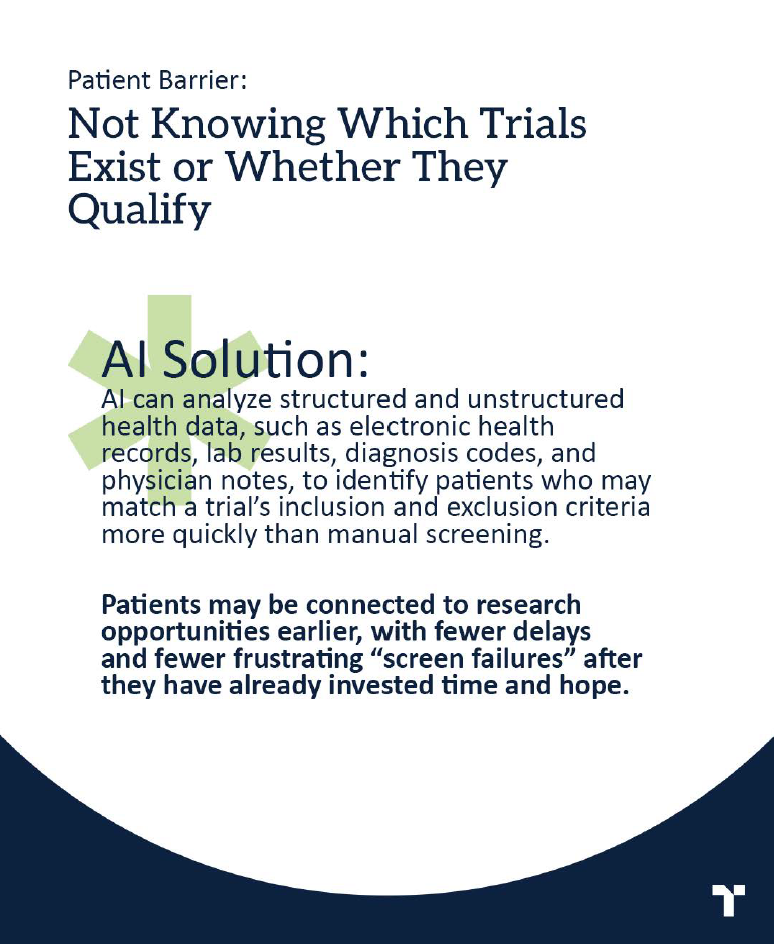
Barrier: Patients don't know which trials exist or whether they qualify. AI can scan structured and unstructured health data, electronic health records, lab results, diagnosis codes, and physician notes, to match patients against inclusion and exclusion criteria faster than manual screening. That means earlier connections to research opportunities and fewer screen failures after a patient has already invested time and hope.
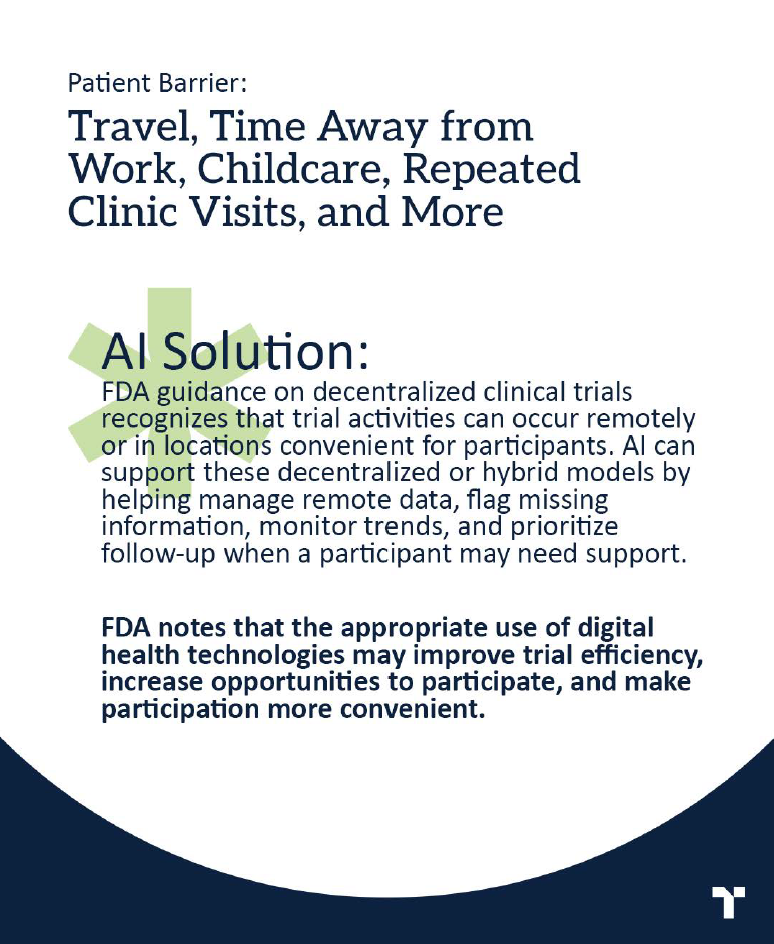
Barrier: Travel, work schedules, childcare, and repeated clinic visits get in the way. FDA guidance on decentralized clinical trials already supports remote and patient-convenient trial activities. AI strengthens these decentralized and hybrid models by managing remote data, flagging missing information, monitoring trends, and prioritizing follow-up when a participant needs support. FDA has noted that digital health technologies can improve trial efficiency and make participation more accessible.
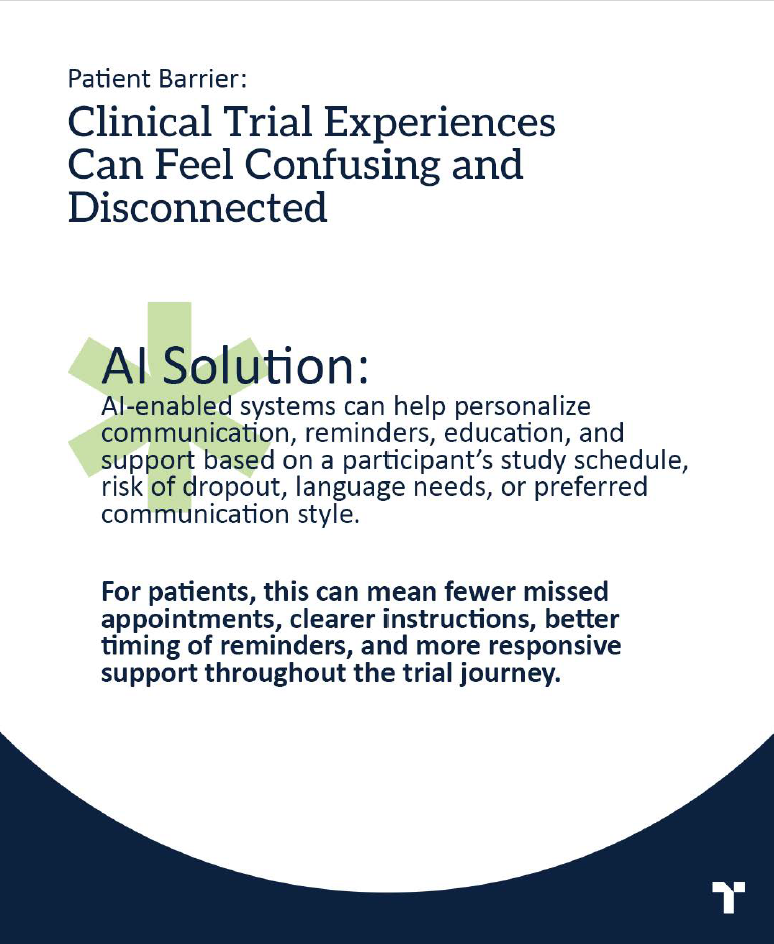
Barrier: The trial experience feels confusing and disconnected. AI-enabled systems can personalize communication, reminders, and education based on a participant's schedule, dropout risk, language needs, or communication preferences. The result: fewer missed appointments, clearer instructions, and more responsive support throughout the trial journey.
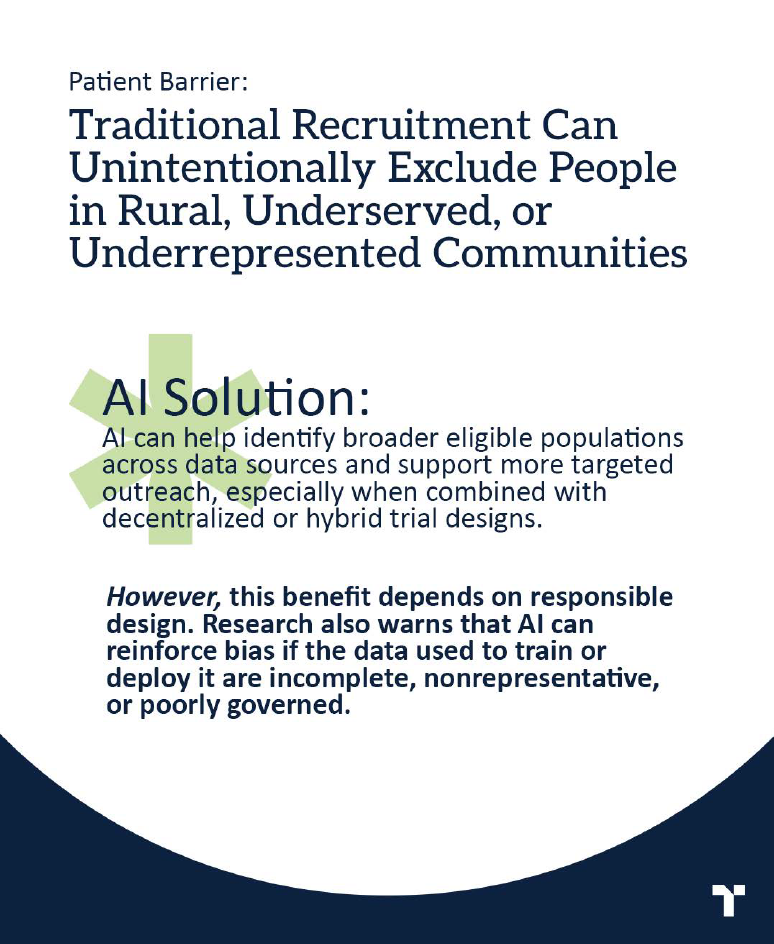
Barrier: Traditional recruitment can exclude rural, underserved, or underrepresented communities. AI can help identify broader eligible populations and support more targeted outreach, especially alongside decentralized or hybrid trial designs. That benefit only holds with responsible design, though. Research also warns AI can reinforce bias if the underlying data is incomplete, nonrepresentative, or poorly governed.
AI has real potential to make clinical trials more accessible and less burdensome for patients, but only when applied thoughtfully. Sponsors and CROs that pair AI-driven tools with strong data governance will be best positioned to improve patient-centricity without introducing new risk.
At Tanner Pharma Group, we help biopharmaceutical companies build patient-centric trials backed by smart, responsible clinical trial solutions.
Ready to talk about your next patient-centric trial? Let's connect.